Older architectural foundations near historic corridors require mechanical physical defense rather than temporary poison applications. In areas like Enos Park, the Historic West Side, and Vinegar Hill, aged stone…
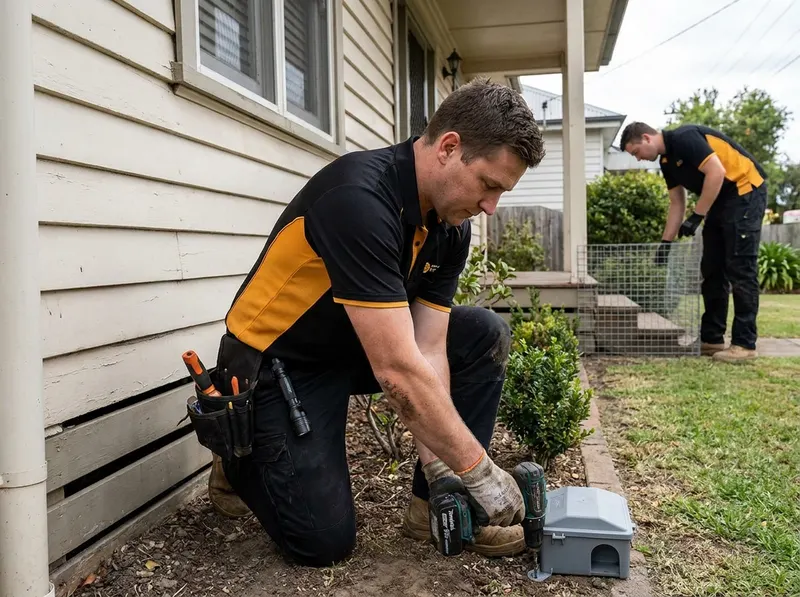
Older architectural foundations near historic corridors require mechanical physical defense rather than temporary poison applications. In areas like Enos Park, the Historic West Side, and Vinegar Hill, aged stone foundations, floorboard gaps, and historical crawlspaces provide uninhibited winter access for Norway rats seeking thermal relief near interior plumbing lines. Standard over-the-counter bait blocks leave rodents to expire inside enclosed sheetrock walls, generating intense decomposition odors and secondary carpet beetle outbreaks. Professional remediation deploys high-tension mechanical traps strategically positioned along diagnosed perimeter baseboard paths, achieving rapid interior depopulation within 48 to 72 hours while residents remain safely inside the home.
Structural protection demands rigid engineering materials that resist constant gnawing. Along mature, tree-canopied lots in Hawthorne Place, Leland Grove, and Indian Hills, roof-line gaps around fascias, chimney flashing, and soffit screens allow mice to drop straight into ceiling insulation from overhanging branches. Technicians seal every void wider than 1/4-inch using 16-gauge galvanized steel mesh, copper wire weave, and elastomeric hydraulic compounds that rodents cannot chew through. If a residence shows only perimeter activity without ceiling scratching, exterior containment stations prevent indoor colonization; if scratching sounds occur inside sheetrock, interior extraction protocols activate simultaneously with structural sealing.
Riparian and commercial transition zones present heightened rodent volume throughout Sangamon County. Properties bordering water retention systems in Laketown, drainage corridors near Bunn Park, or rail-adjacent industrial zones around the Pillsbury Mills area experience persistent outdoor rodent migration. A single pair of field mice produces up to 10 litters annually, meaning partial trapping without entry-point exclusion leads to total structural re-infestation within 60 days. Professional remediation removes contaminated nesting materials, applies biological enzyme washes across targeted insulation areas, and establishes mechanical perimeter blockades to ensure long-term defense without locked-in subscription models.
Every job gets a firm, written price after a free on-site visit.
Tell us about your rodent control job in Springfield and we'll send a clear, written quote, usually the same day.
 Savero Pest Patrol