Securing a professional pest control service Springfield homeowners rely on halts structural degradation and sanitary contamination before colony populations multiply across interior walls. Property owners seeking pest control service near me receive a methodical site evaluation, direct insect or vertebrate eradication, and structural barrier sealing.
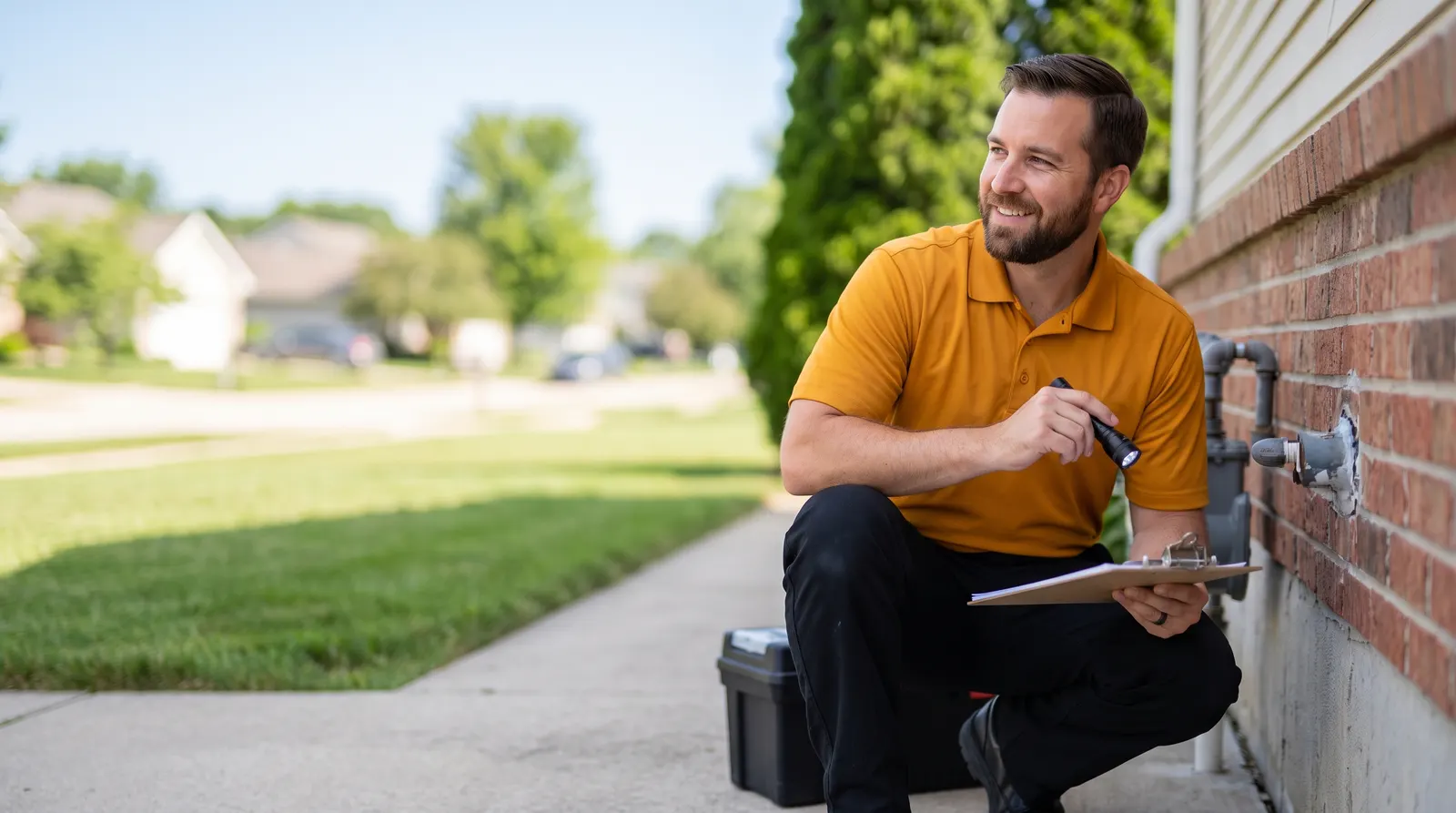
A pest control service in Springfield is a specialized structural inspection, containment, and extermination procedure designed to eliminate biological infestations from residential and commercial properties throughout Sangamon County.
Every service reflects the same meticulous attention to detail, whether it's a single job or a larger pest control service project across Springfield.
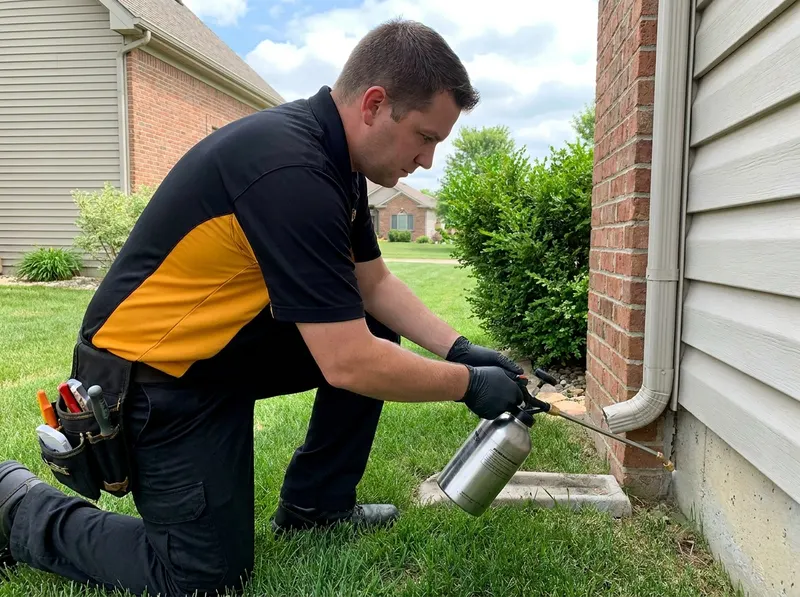
Comprehensive indoor and outdoor remediation targeting living areas, basements, crawlspaces, and attics using targeted barrier defenses and void injections. Treatment protocols systematically neutralize crawling insects, seasonal perimeter invaders, and pantry pests. Field operators deploy non-staining micro-encapsulated residuals across baseboards, structural thresholds, pipe chases, and exterior foundation zones up to three feet above grade. Targeted dust formulations are injected directly behind switch plates, wall hollows, and underneath permanent cabinetry where insects harbor out of reach of standard surface sprays. Crawlspaces receive targeted moisture-barrier checks and perimeter dust treatments that neutralize pest pressure at the ground line without introducing excessive airborne chemicals into main living quarters.
Get a quote →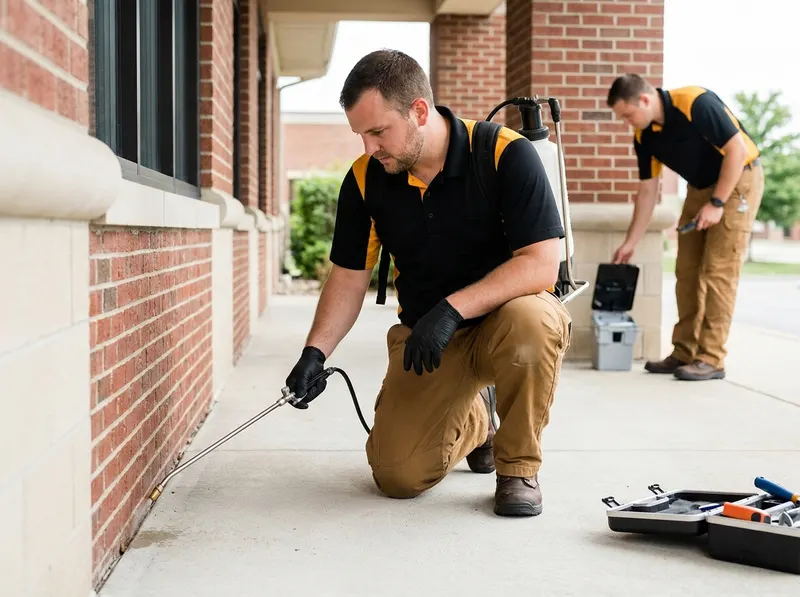
Regulatory-compliant containment protocols for food service facilities, warehouses, multi-family housing complexes, and healthcare operations across Sangamon County. Procedures adhere strictly to FDA, USDA, and local public health standards, deploying documented electronic scanning and barcode tracking on all interior bait stations and insect light monitors. Treatments prioritize tamper-resistant mechanical bait stations, non-pesticidal glue boards, and targeted crack-and-crevice applications of insect growth regulators. Every facility service visit concludes with an itemized digital inspection manifest recording pest counts, sanitation action items, entry-point breaches, and verifiable pesticide usage logs required by commercial health inspectors and municipal sanitation auditors.
Get a quote →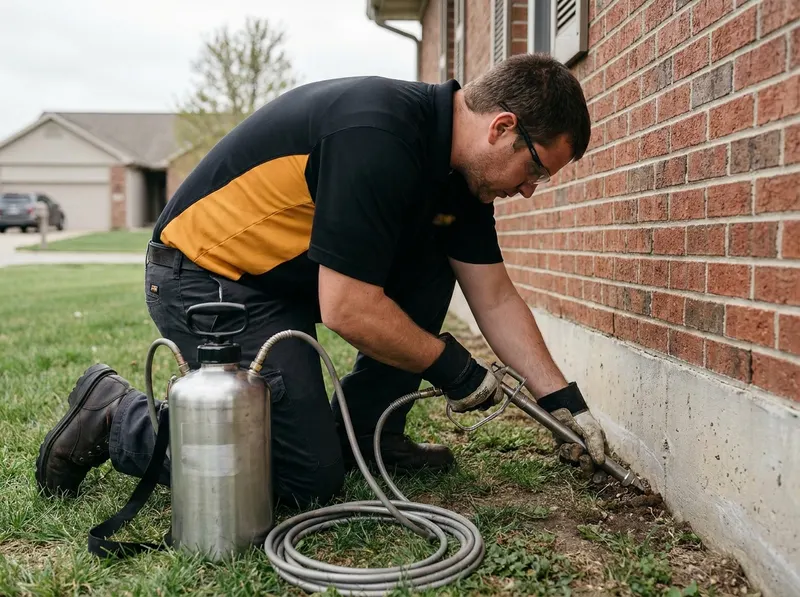
Direct liquid soil perimeter applications and targeted subterranean baiting networks engineered to sever structural colonies damaging foundation sills and framing members. Technicians excavate continuous perimeter trenches along exposed foundation walls, treating backfill soil with non-repellent liquid termiticides like fipronil at precise label rates of 4 gallons per 10 linear feet per foot of depth. For finished basements, slab construction, and masonry patios abutting the home, concrete drill-and-injection methods establish an unbroken chemical barrier under hardscapes. In-ground monitoring stations spaced every 10 to 15 feet around the drip line detect exploratory foraging workers, delivering chitin-synthesis inhibitors that workers distribute to the subterranean nest to collapse the reproductive termite queen.
Get a quote →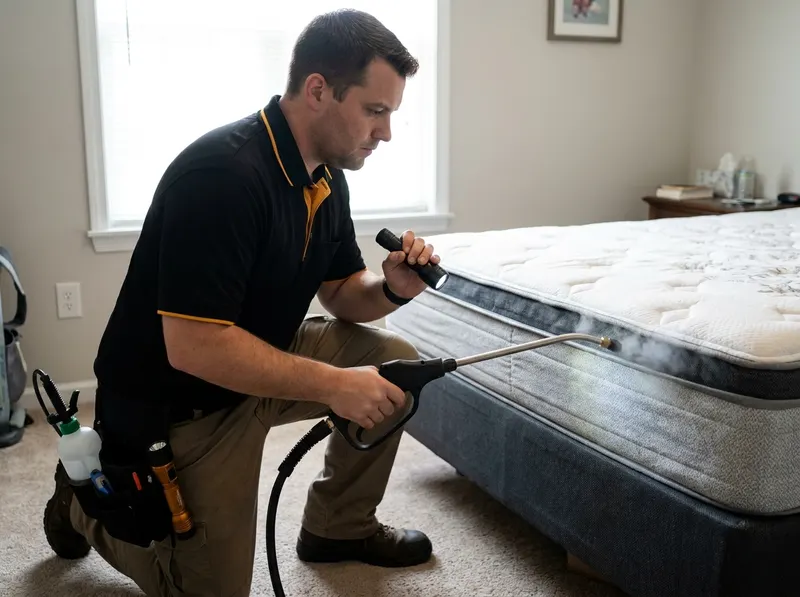
Lethal thermal convection protocols combined with precise active-ingredient applications reaching deep mattress seams, baseboards, and interior wall voids. Thermal remediation circulates high-output, temperature-regulated convective airflow between 125°F and 135°F, penetrating deep into structural framing, upholstery, carpet pads, and wall voids to reach lethal thermal death points for bed bug adults, nymphs, and eggs within hours. Complementary chemical remediation pairs dual-action non-repellent insecticides with amorphous silica dusts applied behind electrical faceplates, along baseboard tracks, and inside furniture joints. This two-phase mechanical and chemical barrier ensures residual containment against dormant nymphs emerging from newly hatched eggs, preventing population resurgence.
Get a quote →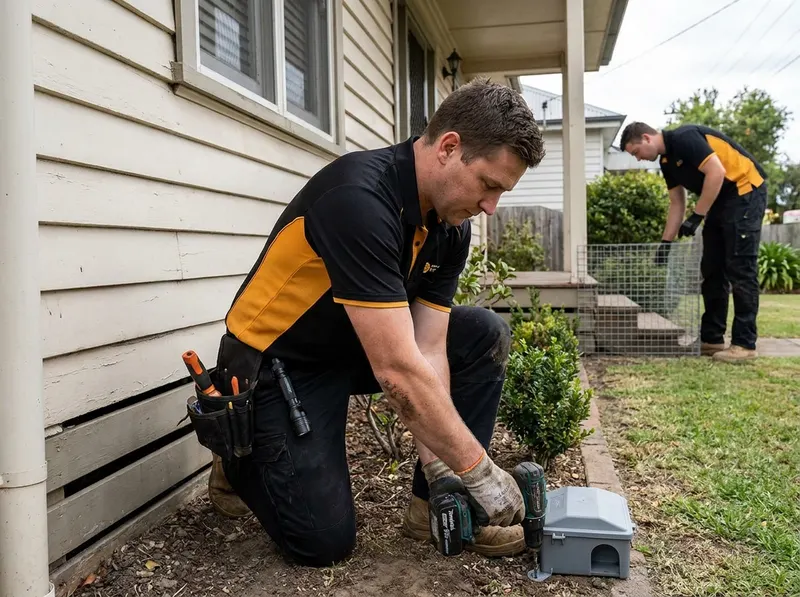
Interior mechanical capture paired with rigorous external structural exclusion, closing foundation and siding gaps wider than one-quarter of an inch. Field technicians conduct attic-to-crawlspace inspections to identify primary run lines, rub marks, urine deposits, and gnaw sites created by Norway rats, roof rats, and house mice. High-tension snap traps and multi-catch mechanical units are installed inside hidden crawlspaces, suspended ceilings, and utility closets away from children and pets. Technicians physically seal exterior utility penetrations, corner bead gaps, foundation vents, and sill-plate cracks using heavy-gauge galvanised steel mesh, copper mesh, and elastomeric structural sealants to prevent replacement colonies from entering the conditioned thermal envelope.
Get a quote →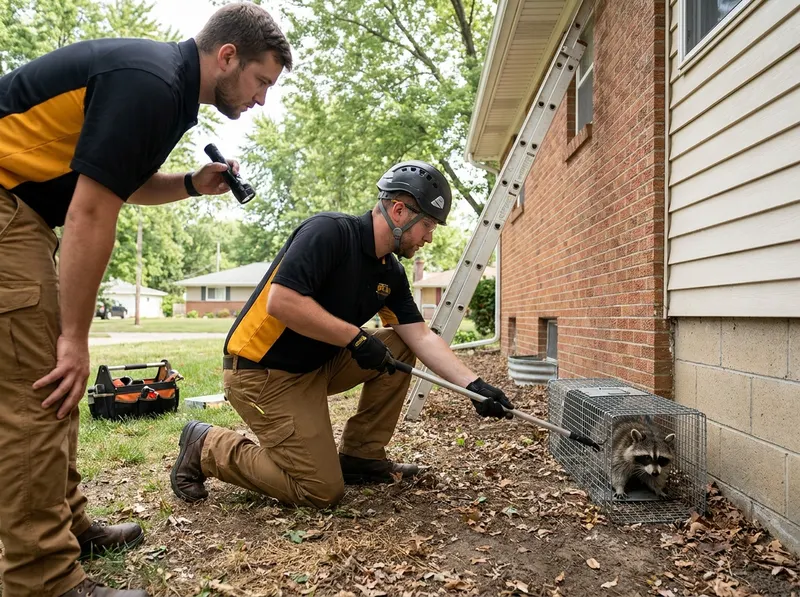
Humane directional one-way exit systems and physical barrier exclusions for raccoons, squirrels, bats, and opossums nesting in soffits, attics, and chimney chases. Technicians locate primary structural breaches along roof intersections, ridge vents, facia boards, and gable louvers, installing heavy-duty galvanized wire screening and spring-loaded one-way exit tunnels that permit animals to leave for water and food while preventing re-entry. Once diagnostic acoustic monitoring confirms wildlife clearance, operators remove structural nesting material, apply enzymatic sanitizing sprays to neutralize biological pheromones and pathogen-laden feces, and permanently flash the entry breach with metal sheet metal and exterior structural screws.
Get a quote →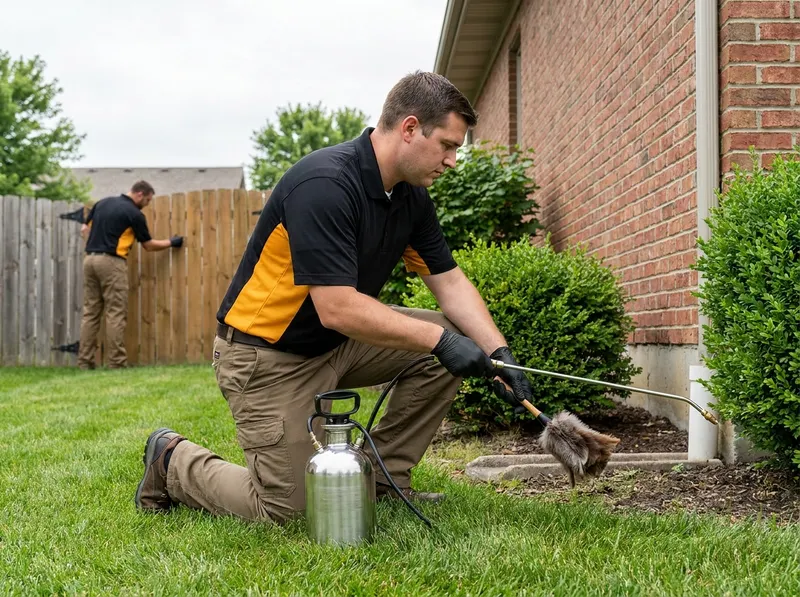
Colony-eliminating bait matrixes and slow-acting non-repellent barrier treatments that foraging workers transport back into subterranean or wall-void queens. Protocol formulation alternates protein, lipid, and sweet carbohydrates depending on current colony dietary shifts between early spring brood development and mid-summer foraging. Slow-acting micro-residuals applied around building perimeters, foundation expansion joints, and window reveals cling to ant exoskeletons without alerting scout ants, ensuring the transfer of active insect growth regulators into the deepest subterranean chambers of odorous house ants, pavement ants, and carpenter ants before mortality occurs.
Get a quote →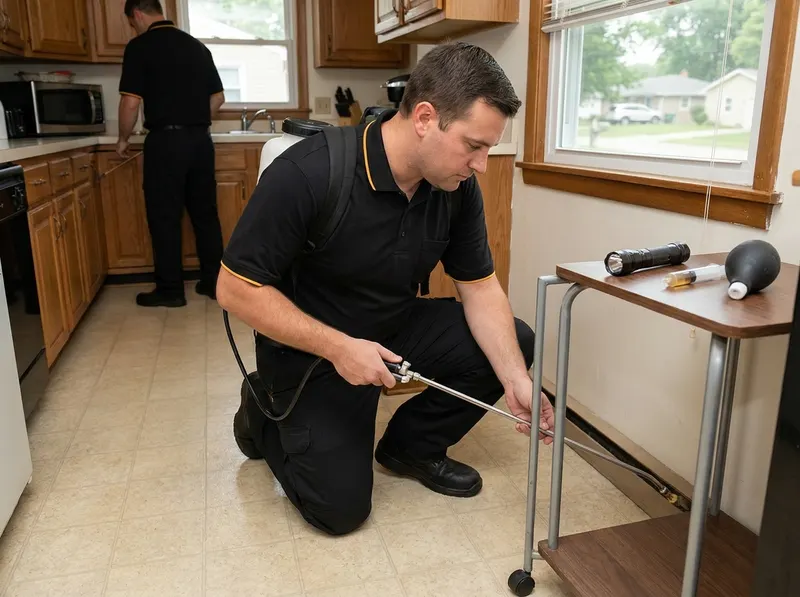
Cleanout treatments incorporating insect growth regulators and high-potency spot baits to arrest the reproductive cycles of German, American, and Oriental roaches. Interventions deploy targeted gel matrices containing hydramethylnon or indoxacarb into structural cracks, hinge corners, appliance motor housings, and plumbing penetrations where roaches aggregate. Simultaneously, insect growth regulators like pyriproxyfen prevent juvenile nymphs from maturing into reproductive adults and deform ootheca egg cases. Exhaustive monitoring glue boards measure population drop within 7 to 14 days, verifying total eradication in high-moisture kitchen, pantry, and crawlspace harborage environments.
Get a quote →You get a firm, itemized quote for your pest control service before any work begins, no surprises, no pressure.
Careful prep, tidy work, and a full cleanup when we are done. We treat your home and belongings like our own.
The same trusted, background-checked team from the first call to the final check.
Selecting appropriate intervention models depends directly on pest biology, colonization depth, and building construction type. For subterranean wood-destroying insects or hidden wall cavity pests like German cockroaches and bed bugs, targeted chemical injection or thermal remediation is required; passive surface barrier spraying alone will fail to eliminate egg caches inside enclosed framing. If dealing with mice or rats, prioritizing mechanical exclusion sealing alongside interior multi-catch stations produces immediate population collapse, whereas deploying toxic baits outdoors without closing entry voids only invites neighboring rodent colonies into the thermal envelope.
The trade-off between targeted single-visit containment and phased remediation lies in biological reproductive cycles: wood-boring beetles and bed bugs demand multi-stage interventions to interrupt egg incubation windows, while localized stinging insect nests or seasonal perimeter invaders can be cleared in a single targeted mechanical visit. Homeowners prioritizing indoor chemical minimization should select structural perimeter barrier defense and interior physical trapping; those experiencing established internal nesting must permit direct harborage zone treatments to ensure complete eradication. Furthermore, property construction dictates strategy: poured concrete foundations permit continuous external chemical trenches or exterior bait stations, while historic rubble stone or soft brick foundations require micro-injections of non-staining botanical or synthetic dusts combined with hydraulic mortar repairs and copper wire mesh stuffing.
Choosing exterior-only seasonal perimeter spraying is cost-effective for general prevention against spiders, ground beetles, and field ants, but it fails completely once rodents or wood-destroying organisms breach the building envelope. In such active internal scenarios, property owners must trade the convenience of non-intrusive external sprays for intensive interior wall-void dustings, baseboard flushes, and mandatory 2-to-4-hour drying intervals to reach the physical harborages where nymphs and reproductive colonies feed.
Every project gets a firm, written price after a free on-site visit. Ranges below for orientation.
Tell us about your pest control service job and we'll send a clear, written quote, usually the same day. Or just call and talk to a real Springfield pro.
(327) 202-3618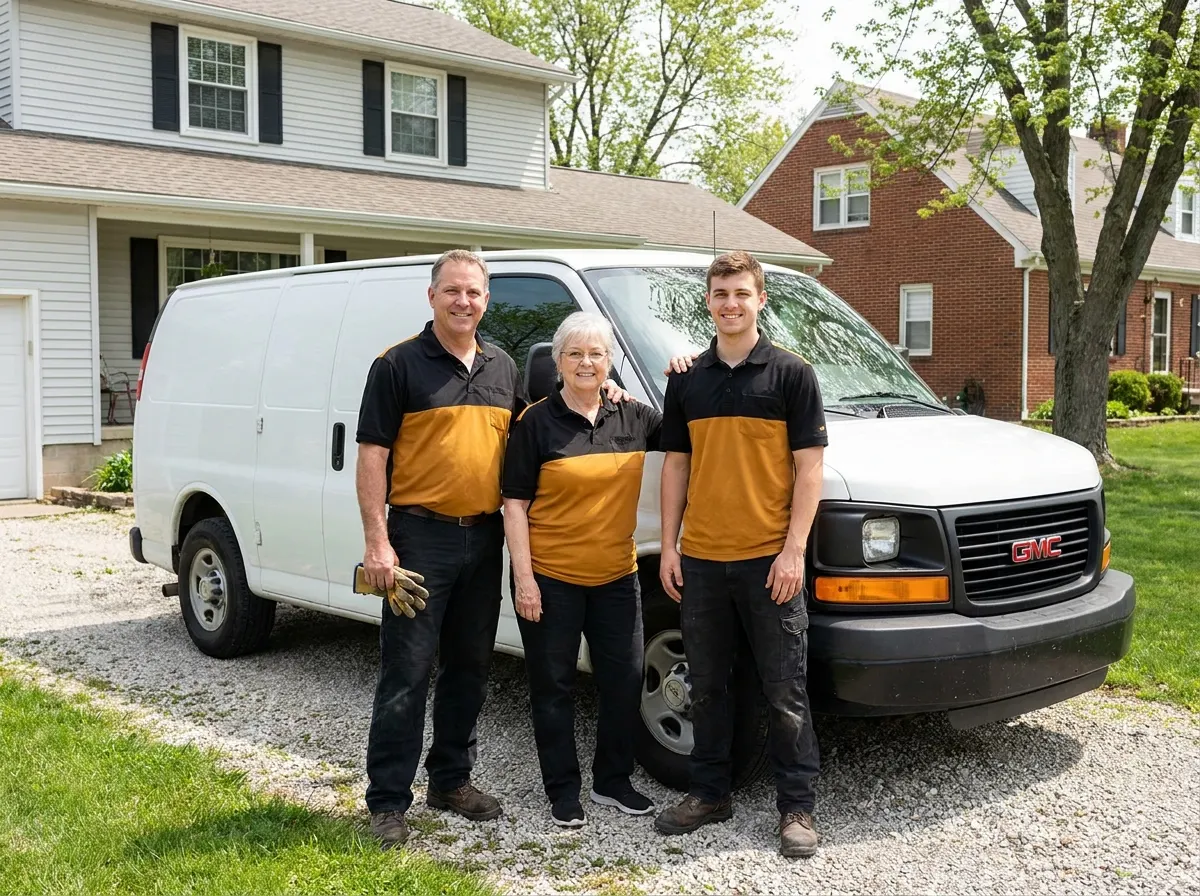
Springfield properties face distinct biological pressures driven by regional architectural history, local geography, and seasonal weather swings. In older residential enclaves such as the Historic West Side, Enos Park, and Vinegar Hill, aged limestone foundations, brick mortar erosion, and balloon-frame timber framing create natural subterranean channels for Norway rats and mice entering basements during the autumn temperature drop. These vintage homes frequently feature structural settling around floor joists, unsealed stone basement window wells, and aged timber sills that allow unhindered access directly into interior wall cavities. Concurrently, proximity to Lake Springfield, the Sangamon River drainage channels, and wooded parks like Washington Park Botanical Garden amplifies summer humidity, triggering aggressive subterranean termite swarms from April through May and persistent carpenter ant nesting inside older structural timber. In industrial and transitional residential zones near the Pillsbury Mills area and the Bunn Park neighborhood, legacy brick infrastructure and fragmented drainage swales create elevated harborage points for German cockroaches, American cockroaches, and localized vertebrate pests. The presence of mature tree canopies across Leland Grove and Hawthorne Place creates continuous roofline bridges, enabling raccoons, grey squirrels, and bats to access older attic spaces through unlatched louvers or degraded cedar shake roofs. Furthermore, winter frost lines extending 20 to 30 inches deep across Sangamon County force subterranean pests to track heating ducts and plumbing trenches straight through foundation footprints, requiring mechanical exclusion protocols specifically calibrated for Midwestern soil movement, freeze-thaw shifts, and historic masonry preservation.
Free estimates for Springfield & the surrounding area.
 Savero Pest Patrol