Residential mosquito control targets the specific breeding environments created by Sangamon County's flat drainage planes and humid summer temperatures. In older established neighborhoods like the Historic West Side,…
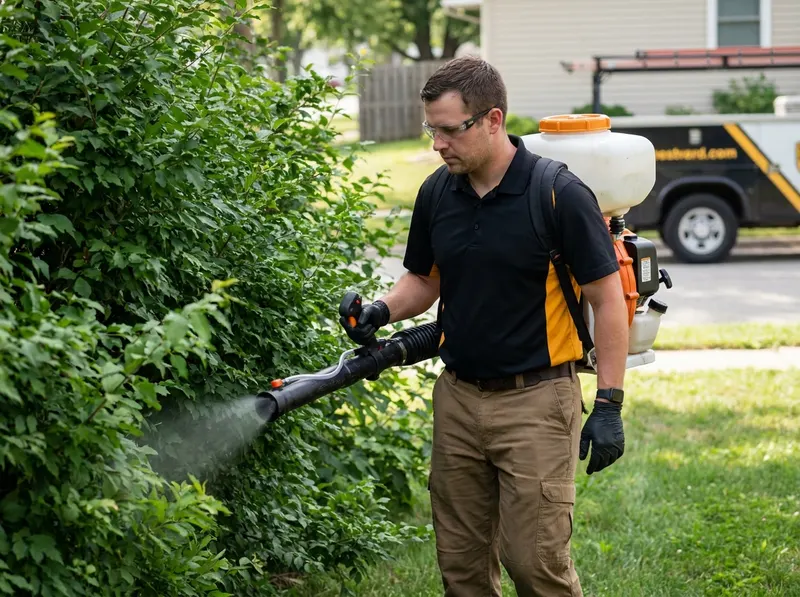
Residential mosquito control targets the specific breeding environments created by Sangamon County's flat drainage planes and humid summer temperatures. In older established neighborhoods like the Historic West Side, Enos Park, and Hawthorne Place, deep shade from mature oak and maple canopies keeps yard perimeters damp, allowing adult mosquitoes to shelter on the undersides of broad leaves during peak daylight hours. Properties near the water runoff zones around Lake Springfield, Bunn Park, and the low-elevation drainage paths near Laketown face intense emergence cycles of Culex pipiens, the primary regional carrier of West Nile virus. Effective suppression eliminates these resting areas while targeting active larvae before they reach the biting adult stage.
Immediate property relief requires distinguishing between adult knockdown misting and structural water management. A standalone fogging application coats shrubs, ground cover, and structural overhangs up to a height of 10 feet, creating an insecticidal barrier that knocks down flying adults on contact for 21 to 30 days. However, barrier applications alone fail if stagnant retention zones remain untreated. Properties near open drainage ditches in Indian Hills, aging storm basins around the Pillsbury Mills area, or shaded brick courtyards in Vinegar Hill and Leland Grove require micro-encapsulated larvicides in standing water that cannot be physically drained. The trade-off is treatment durability versus environmental impact: broad-spectrum misting provides instant perimeter clearance for outdoor living, but persistent control demands continuous elimination of container habitats such as gutters, unsealed rain barrels, and sunken landscape beds.
Treatment applications require a 30- to 45-minute dry time before children and domestic animals can re-enter treated lawn areas. Barrier fogging should not occur during active rain events, as surface wash-off into municipal storm sewers reduces the product half-life and fails to bond with foliage. Technicians systematically map property borders, avoid blooming pollinator plants to protect honeybees, and establish defensible perimeters around patios and structural entry points. Scheduling an evaluation through (327) 202-3618 secures an on-site assessment to measure lot boundaries, confirm drainage points, and deliver an accurate operational plan.
Every job gets a firm, written price after a free on-site visit.
Tell us about your mosquito control job in Springfield and we'll send a clear, written quote, usually the same day.
 Savero Pest Patrol