Ant infestations in Springfield homes rarely resolve with retail contact sprays because surface pyrethroids trigger colony budding, scattering single queens into multiple satellite nests within wall voids. In older…
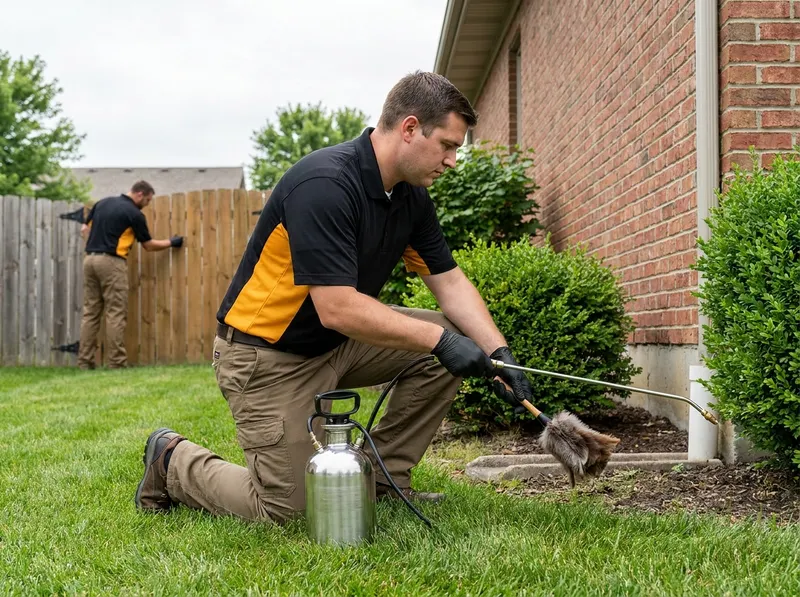
Ant infestations in Springfield homes rarely resolve with retail contact sprays because surface pyrethroids trigger colony budding, scattering single queens into multiple satellite nests within wall voids. In older residential architecture throughout the Historic West Side and Enos Park, carpenter ants exploit moist structural framing near roof flashings and brick sill plates, chewing nesting galleries directly into softened pine timbers. Smaller nuisance species like odorous house ants and pavement ants penetrate concrete slab foundations and mortar joints in ranch-style basements common to Laketown and Indian Hills, creating scent trails that lead straight into pantry storage. Structural remediation requires targeting the brood chamber through horizontal transfer chemistry rather than repelling worker ants across baseboards.
Technicians conduct a systematic inspection along water supply lines, subfloors, and foundational perimeters to map primary nesting sites. Treatment deploys undetectable non-repellent liquid transfers alongside slow-acting matrix baits formulated with carbohydrate and protein attractants. Foraging worker ants ingest the active ingredient and physically transport micro-doses back into interior wall voids, distributing the lethal compound across reproductive queens and nursing larvae over a 72-hour window. This protocol neutralizes the reproductive core of the colony, stopping structural wood damage in Leland Grove estates or food contamination in multi-unit Vinegar Hill rentals without requiring residents to evacuate the home during service.
1. Technicians inspect basement rim joists, kitchen moisture zones, and exterior foundation perimeters to identify the exact ant species and satellite nest locations.
2. Non-repellent active treatments are injected directly into targeted wall voids and mechanical chase openings.
3. Precision bait placements are established along verified interior foraging paths behind appliances and plumbing cutouts.
4. Technicians apply a continuous three-foot vertical and horizontal barrier around the exterior foundation grade using non-detectable chemistry.
5. Exterior entry points along expansion joints, brick weep holes, and siding gaps are structurally detailed to prevent neighboring satellite recolonization.
Direct colony elimination provides permanent structural defense without locking property owners into mandatory quarterly subscription contracts. A one-time intensive remediation solves localized infestations around plumbing fixtures, whereas properties abutting dense tree canopies near Bunn Park or older timber framing near the Pillsbury Mills area may require seasonal perimeter barriers during spring thaw and peak summer heat. The physical trade-off balances focused spot remediation against comprehensive exterior exclusion: spot applications eliminate an immediate indoor trail within hours, but treating the full perimeter band prevents outdoor colonies nesting near sidewalks from breaching sill plates later in the season.
Every job gets a firm, written price after a free on-site visit.
Tell us about your ant control job in Springfield and we'll send a clear, written quote, usually the same day.
 Savero Pest Patrol